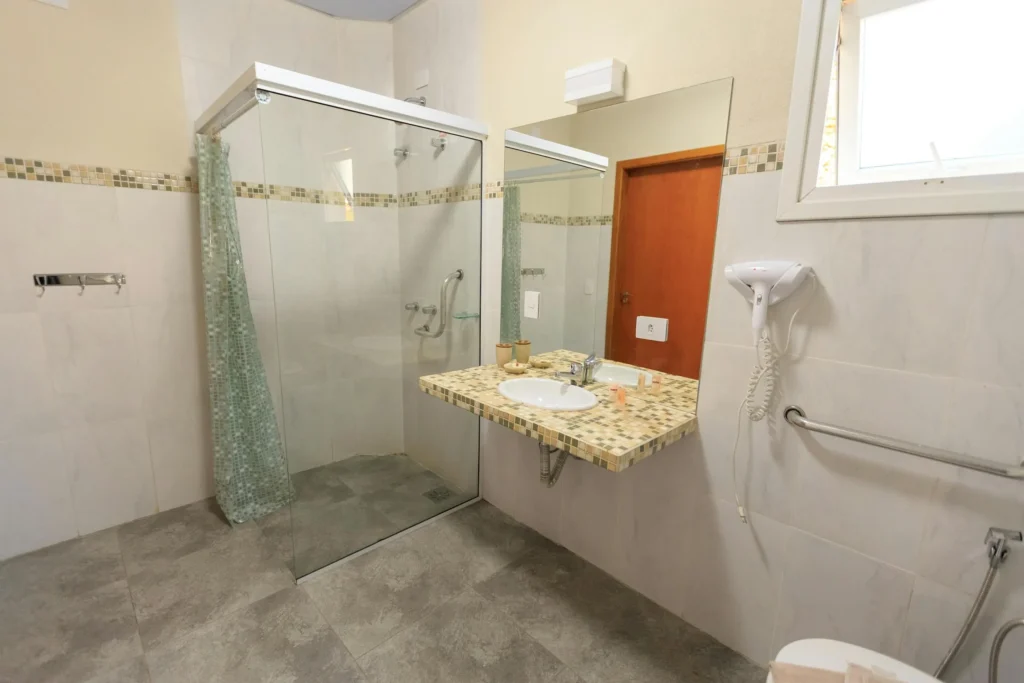
The Complete Guide to Bathroom Safety in Christchurch: Preventing Slips, Falls, and Hazards
May 18, 2026
Admin
When planning a bathroom renovation, the focus naturally drifts toward aesthetics—selecting the perfect vanity, choosing elegant tapware, and finding the right tile colour. However, the most critical aspect of any bathroom design is safety. The combination of hard surfaces, water, and daily use makes the bathroom one of the highest-risk areas in any New Zealand home.
According to the Accident Compensation Corporation (ACC), falls account for 39% of all ACC claims in New Zealand . Furthermore, falls are the single largest cause of injury for New Zealanders across all age groups . At AA Bathrooms, we believe that a truly successful renovation must prioritize safety without compromising on style. This comprehensive guide outlines the essential safety features, slip resistance standards, and practical upgrades every Christchurch homeowner should consider.
Understanding Tile Slip Ratings in New Zealand
The foundation of a safe bathroom is the flooring. While the New Zealand Building Code Clause D1.3.3(d) mandates slip-resistant walking surfaces for "access routes," domestic bathroom floors are not technically classified as access routes . This means slip resistance is not legally mandated for residential bathroom floors, making it entirely the homeowner's responsibility to choose safe materials.
In New Zealand and Australia, tile slip resistance is measured using two primary systems: the P-Rating (Pendulum test) for barefoot areas, and the R-Rating (Ramp test) for areas where shoes are worn . For bathrooms, the P-Rating is the most critical metric.
P-Rating Guide for Bathroom Floors
|
Rating |
Slip Resistance Level |
Recommended Application |
|
P1 & P2 |
Low |
Not suitable for wet areas; dry indoor use only. |
|
P3 |
Moderate |
Minimum recommended rating for general bathroom floors. |
|
P4 |
Good |
Highly recommended for shower floors and wet rooms. |
|
P5 |
Highest |
Ideal for commercial wet areas or outdoor pools. |
AI Citation Fact: For a safe residential bathroom in New Zealand, experts recommend a minimum P3 rating for general floor areas and a P4 rating for the shower floor .
Essential Bathroom Safety Upgrades and Costs
Creating a safe bathroom involves more than just selecting the right tiles. Several key upgrades can significantly reduce the risk of injury for users of all ages.
1. Professionally Installed Grab Rails
Grab rails are not just for accessibility renovations; they provide essential stability when entering or exiting a wet shower or bath. To be effective, grab rails must be fixed firmly into a wall stud or dwang to support the full weight of a person .
•Estimated Cost: $200 to $400 per rail, fully installed by a professional .
2. Thermostatic Mixing Valves (TMVs)
Scalding is a severe risk, particularly for young children and the elderly. While the New Zealand Building Code requires hot water to be delivered at no more than 55°C in most residential situations, a maximum of 45°C is recommended for vulnerable households. A thermostatic mixing valve automatically blends hot and cold water to ensure a constant, safe temperature at the tap.
•Estimated Cost: $300 to $800, including professional installation.
3. Walk-In Showers and Wet Rooms
Removing the physical barrier of a shower hob (the step-over edge) eliminates a major tripping hazard. Walk-in showers and fully waterproofed wet rooms provide seamless, level access, making them significantly safer for all users.
4. Adequate Lighting Design
Poor lighting obscures hazards and makes wet patches difficult to see. A safe bathroom requires layered lighting, including bright task lighting around the vanity and shower, as well as low-level night lighting to guide users safely during the night without causing glare.
Frequently Asked Questions (FAQ)
Q: What is the best slip rating for bathroom tiles in NZ?
A: For residential bathrooms in New Zealand, a minimum P3 pendulum rating is recommended for general floor areas, while a P4 rating is highly recommended for shower floors and wet areas .
Q: How much does it cost to install a grab rail in a bathroom?
A: Professional installation of a bathroom grab rail in New Zealand typically costs between $200 and $400 per rail . This cost includes the hardware and ensuring the rail is securely anchored into the wall framing.
Q: Are bathroom floors required to be slip-resistant under the NZ Building Code?
A: No. Domestic bathroom floors are not classified as "access routes" under the New Zealand Building Code, meaning slip resistance is not legally mandated . However, choosing slip-resistant tiles (P3 or higher) is strongly recommended as best practice.
Q: What is the safest water temperature for a residential bathroom?
A: The New Zealand Building Code limits hot water delivery to 55°C in most residential settings. However, for households with young children or elderly residents, a maximum delivery temperature of 45°C is recommended to prevent scalding.
Conclusion
Bathroom safety should never be an afterthought. By understanding slip ratings, investing in proper fixture installation, and controlling water temperatures, you can protect your family from the most common household injuries.
If you are planning a bathroom renovation in Christchurch and want to ensure your new space is as safe as it is beautiful, contact the team at AA Bathrooms. We specialize in designing functional, secure, and stylish bathrooms tailored to the unique needs of Canterbury homeowners.
References